Wood used to sail to sea in vast amounts from untamed rivers and coasts, where it provided innumerable ecosystem services and habitat for thousands of species - including humans. Now, the flow of driftwood to sea has been greatly curtailed by landscape domestication, and the animals that rely on this habitat, and aquatic structure, are greatly curtailed. Why does this matter?
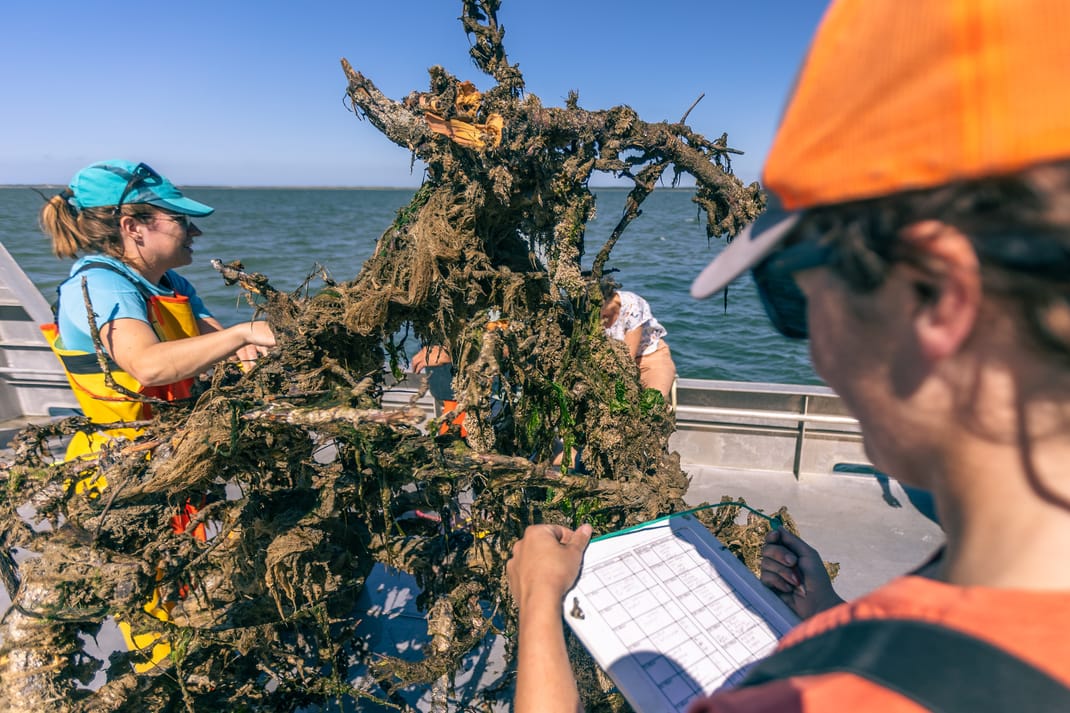
Jon Dickson has been studying how re-introducing driftwood-mimicking structures in the marine environment would affect the local biota - and if 'tree-reefs' could be an effective marine restoration and conservation tool.
Results after three years are positive: fish biodiversity has increased sevenfold, fish abundance sixfold, fish size by 10%, and crab foraging has been decreased by 77% - this due to 'seascape of fear effects'. Much like terrestrial predators, such as wolves, suppress deer foraging, this same effect occurs in the sea - which may be able to help restore native ecosystems such as the extirpated European Oyster. Restoring woody habitats in marine environments may be a cost effective and natural method to restore, replenish, and re-activate native marine habitats.
More info about Jon and the Marine Trees project is here: https://www.marinetrees.com/.
The event is delivered online through the Streamyard platform, with lots of opportunity for the audience to put questions to the speaker. Streamyard requires nothing to be downloaded onto your computer, we will send a joining link out to signed up attendees in the day before the event.
The event is hosted by Dumfries & Galloway Woodlands, a charity supporting trees, habitats and the people that depend upon them in the region. For more information, visit www.dgwoodlands.org.uk.
Event possible thanks to support from the Solway Coast & Marine Landscape Connections Project (SCAMP) (https://www.solwaycoastmarine.co.uk/). SCAMP is exploring the coastal and marine environment and working across disciplines to better understand how the past might help us restore nature now and in the future. SCAMP has been made possible thanks to support from partners including The National Lottery Heritage Fund.